
Commercial Polished Concrete for Showrooms and Lobbies: Appearance and Durability
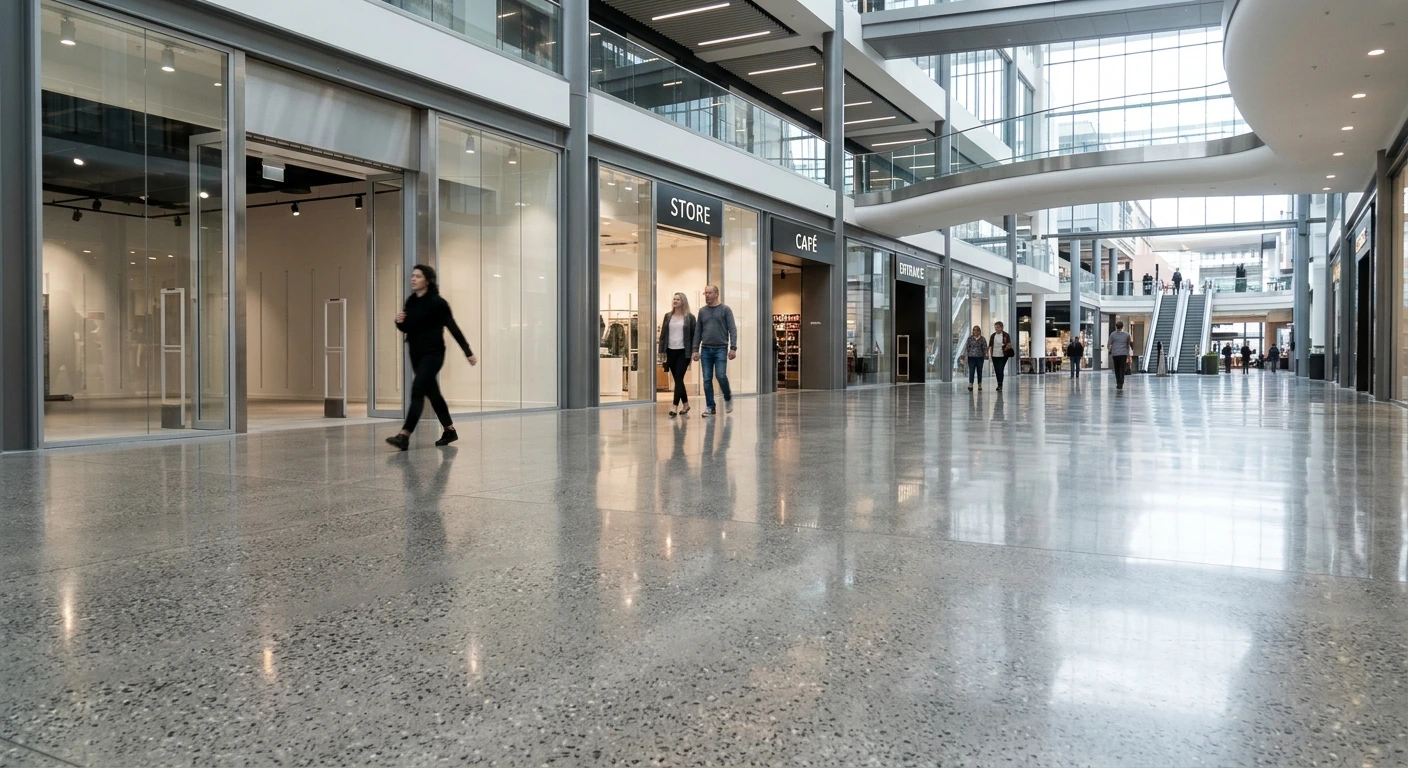
Many showrooms and lobbies have worn vinyl tile sitting on the original slab, often marked with glue and a few cracks. Owners usually want a floor that reflects the lights and holds up to foot traffic all day. Commercial polished concrete turns that existing slab into the finished floor. Concrete Polishing & Epoxy Florida grinds and polishes commercial floors across Tampa Bay, and owners and designers usually start with the same few decisions.
Key Takeaways
- Polishing grinds and hardens the slab itself, so there is no coating to peel.
- Gloss level and aggregate exposure set the final look.
- Patches, cracks and color changes in the old slab show in the finished floor.
- Daily care comes down to dust mopping and a neutral cleaner.
How Is a Polished Floor Made?
A planetary grinder with metal-bond diamonds removes glue, coatings and the top skin of the slab. The crew then steps through finer diamonds, often from 30 or 40 grit up to 800, 1500 or 3000 grit. Partway through, they apply a lithium or sodium silicate densifier. It reacts with the free lime in the concrete and forms a harder surface. A stain guard or penetrating sealer often goes on last to help resist spills.
What Looks Can You Choose?
| Choice | Options | Effect |
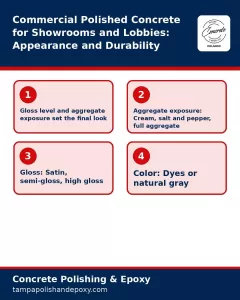
| Aggregate exposure | Cream, salt and pepper, full aggregate | How much stone shows |
| Gloss | Satin, semi-gloss, high gloss | How reflective the floor is |
| Color | Dyes or natural gray | Brand or design match |
A cream finish grinds only the top paste and shows little stone. Salt and pepper grinds a bit deeper to reveal fine sand. Full aggregate goes deeper still and shows the larger stones. Gloss is tied to the final grit. A floor stopped at 400 grit looks satin, and one taken to 3000 grit looks close to a mirror.
Get a Free Epoxy Flooring Estimate
Speak with Our Team! Call Now!
How Durable Is It?
A densified slab handles heavy foot traffic and rolling carts without a film on top that can scuff or peel. Acids such as soda, citrus juice and some cleaners can still etch concrete, and oil can soak in and stain it. Wiping spills up quickly keeps the surface even.
What Can Affect the Result?
Polishing shows what is in the slab. Old patches made with a different mix show up as a different color. Cracks and saw cuts stay visible unless they are filled. Slabs that were troweled unevenly can have patches where more stone shows. We look at the slab before work starts and explain what the finished floor will look like.
How Do You Care for It?
A daily pass with a microfiber dust mop removes grit before it scratches. Wet cleaning with a pH-neutral cleaner keeps the densified surface intact. Over time, a high-speed burnisher with a diamond pad brings back the shine in traffic lanes.
See our concrete polishing, concrete sealing and resurfacing services, plus concrete flooring in St. Petersburg.
How Does Densifier Harden the Surface?
Concrete contains calcium hydroxide left over from the reaction between cement and water. This material is soft and weak. Densifiers made from lithium, sodium or potassium silicates soak into the surface and react with that calcium hydroxide. The reaction forms calcium silicate hydrate, the same hard compound that gives cured concrete its strength. Pores fill in, and the top layer of the slab becomes harder and less porous.
Commercial polished concrete relies on this step. After the first coarse grinding passes, the installer applies densifier and lets it react. The harder surface takes a better polish in the following passes, and it resists dusting, which happens when the soft surface wears away under foot traffic. The densified surface also absorbs less liquid, so spills are less likely to soak in and stain.
How Do Grinding Passes Create the Shine?
Polishing works like sanding wood, but with diamond tools. The first passes use coarse metal-bonded diamonds that cut into the surface and remove high spots and blemishes. Each following pass uses finer diamonds, often in resin bonds, which remove the scratches left by the last tool. As the scratches get smaller, the surface reflects more light.
The final shine depends on how far the process goes. Stopping at a medium grit gives a satin look. Continuing to very fine grits produces a high gloss that can reflect overhead lights. Installers often measure the result with a gloss meter so a business can see the level it chose.
Why Does the Existing Slab Change the Result?
No two slabs look alike when they are polished. The amount of aggregate showing depends on how deep the grinding goes. Light grinding shows the cream, the thin cement layer at the top. Deeper grinding cuts into the sand and then into the larger stone. Old slabs may also have patches, stains, cracks and adhesive residue from earlier flooring that will show through.
A test area helps set expectations before the full job. Installers grind and polish a small section to show the color, aggregate exposure and gloss level the slab can reach. Business owners in Tampa often use that sample to decide whether the natural look fits their space or whether a dye or stain should be added.
How Does a Guard Protect the Floor?
After polishing, many installers apply a penetrating guard. This product soaks into the top layer and adds stain resistance without forming a thick film. It helps the floor shed oils and liquids long enough for staff to wipe them up. Over time the guard wears down in high-traffic areas, and it can be refreshed during routine maintenance. Regular dust mopping and auto scrubbing with a neutral cleaner keep the surface shiny and help the guard last longer.
Get a Free Epoxy Flooring Estimate
Speak with Our Team! Call Now!
Talk With Our Team
Call (813) 440-8945 or request a free estimate to see if commercial polished concrete is right for your space.
Frequently Asked Questions
Q: Is polished concrete slippery?
A: A clean, dry polished floor usually has good traction. Water, dust and oil reduce grip, so keep it clean and dry.
Q: Can any slab be polished?
A: Most can, though condition matters. We assess the slab first.
Q: How long does polished concrete last?
A: With basic care, the polish lasts for many years and can be refreshed with burnishing.
Recent Posts