Office Epoxy Flooring: Looks vs. Performance
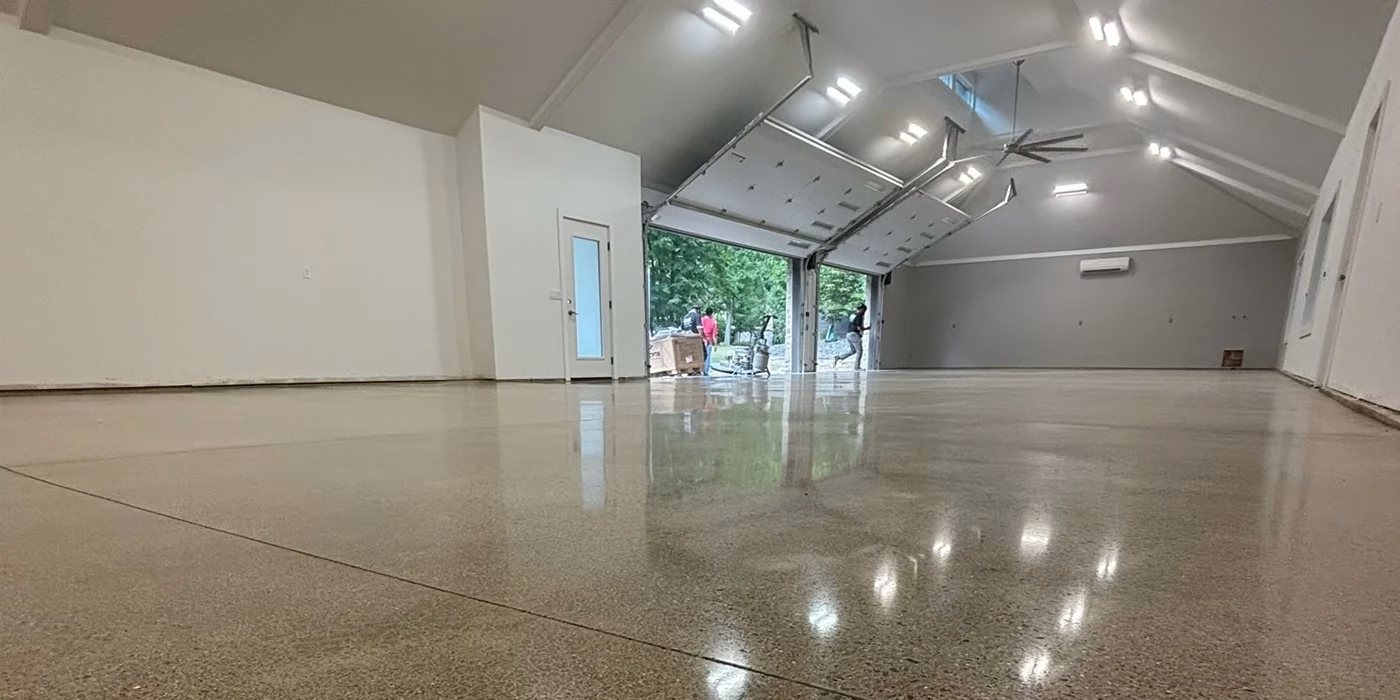
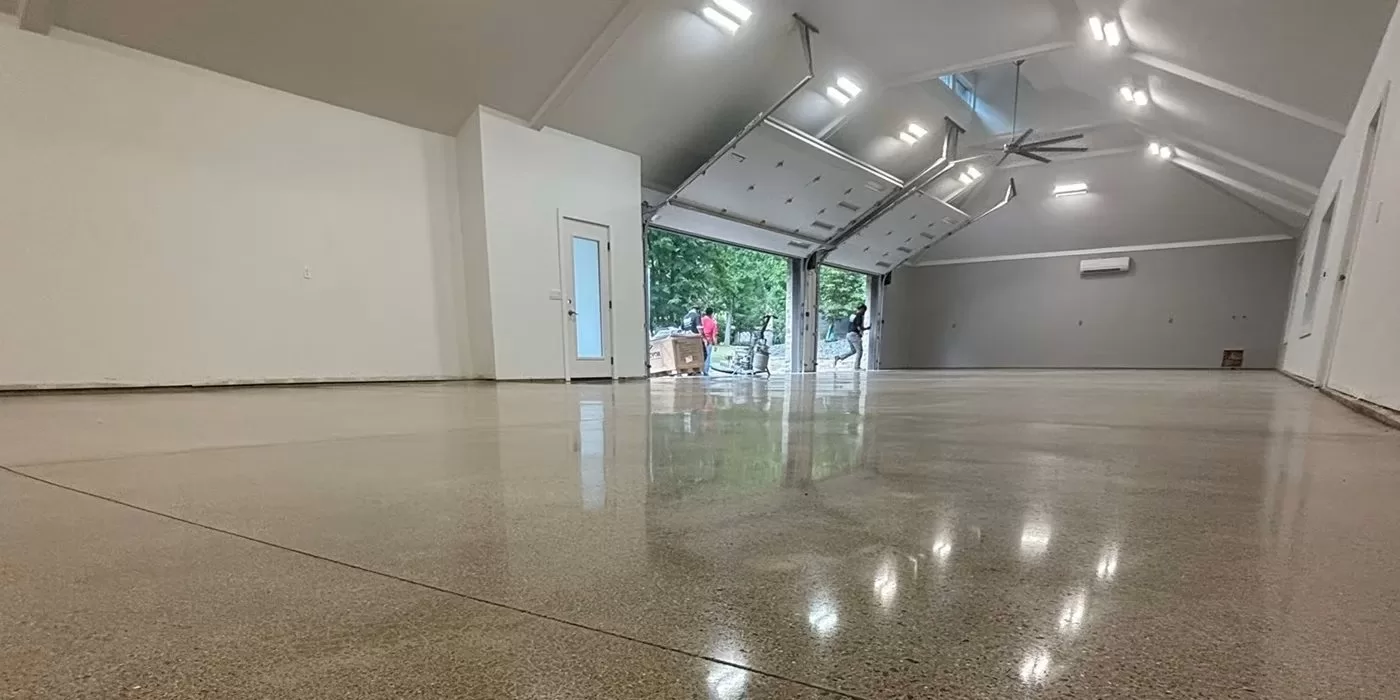
Office epoxy flooring can give a workspace a clean, modern look. It also has to handle rolling chairs, steady foot traffic, routine cleaning, and the occasional spill without losing that look. The best choice balances how the floor looks on day one with how it performs after years of use. That balance starts with the existing concrete, the system chosen, and how the space is used.
At Concrete Polishing & Epoxy Florida, we coat and polish existing commercial concrete in Tampa Bay. We do not pour new slabs, so our work always starts with the floor you already have, and that slab shapes every choice that follows. You can see our epoxy floor coating services to learn how we approach these projects.
Key Takeaways
- Office epoxy flooring should be chosen for both looks and daily wear, not one or the other.
- The slab’s condition and moisture level decide which coating system makes sense.
- A commercial floor coating needs the right topcoat for chair casters and cleaning.
- Slip resistance matters most at entries, break rooms, and restrooms.
- Plan the work around your schedule so the office can keep running.
What Should You Weigh First With Office Epoxy Flooring?
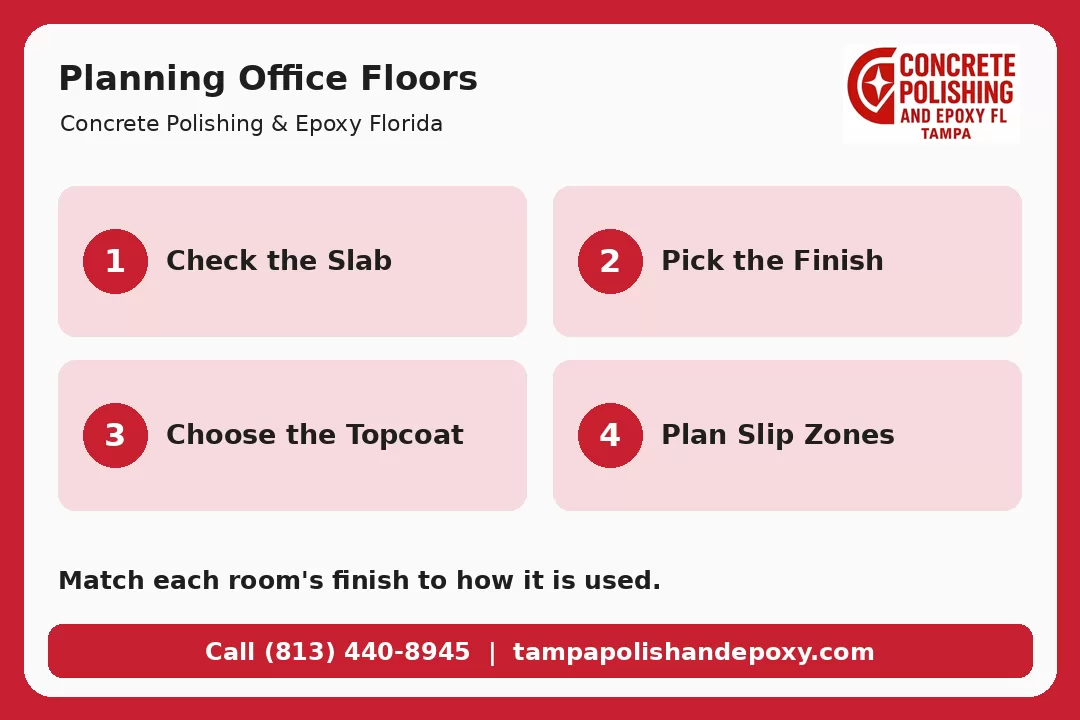
Start with how people use each room, because a lobby sees street grit and wet shoes, a break room sees spills, and private offices see rolling chairs all day. Each area puts a different kind of stress on the floor, so one finish may not suit every space.
Next, look at the concrete under the old flooring. Carpet glue, tile mortar, cracks, and patched areas all affect the prep work. A coating can only bond as well as the surface beneath it, which is why we look at the slab before we talk about colors.
Finally, think about the look you want, since some offices prefer a bright, seamless floor while others want a quieter tone that hides dust between cleanings. Your goal shapes the color, finish level, and topcoat.
Get a Free Epoxy Flooring Estimate
Talk with Our Team! Call Now!
How Do Appearance Choices Change Performance?
Looks and wear are closely tied together, and a very high gloss can show scratches and dust sooner than a softer sheen. A satin finish tends to hide light wear. Solid colors give a clean, simple look, while flake blends can mask small marks between cleanings.
| Choice. | Look it gives. | Performance note. |
|---|---|---|
| Solid color. | Clean and uniform. | Shows dust more on dark tones. |
| Decorative flake. | Textured and lively. | Hides small marks and adds grip. |
| Metallic finish. | Flowing, upscale look. | Needs a tough topcoat in busy paths. |
| Satin topcoat. | Softer sheen. | Helps hide light scuffs. |
| High-gloss topcoat. | Bright and reflective. | Can show wear sooner in traffic lanes. |
No single choice is right for every office, so a reception area may get the showpiece finish. A hallway may get a simpler system built for traffic. We help you match each zone to its job.
Why Does the Topcoat Matter So Much in an Office?
The topcoat is the layer people actually walk on, and it takes the scuffs from shoes, chair wheels, and delivery carts. A strong topcoat protects the color coats below and keeps the floor easier to clean.
Rolling chairs are a common concern because hard casters can wear a path in one spot over time. Ask about topcoats made for abrasion and about chair mats where desks sit. Small steps like these protect the floor’s appearance for much longer.
Industry guidance from Sherwin-Williams on epoxy flooring notes that poor surface prep is a leading cause of coating failure. That is why prep and topcoat choices go together.
Is Office Epoxy Flooring Slippery?
It can be slippery when wet if the surface is smooth, so the fix is to plan extra grip wherever water tends to show up. Entries, break rooms, and restrooms are the usual spots. An anti-slip additive or a light texture in those areas can improve footing.
You do not have to add texture everywhere, because dry office areas can usually keep a smoother finish. A good plan places grip where it is needed and keeps the look clean elsewhere. Walk-off mats at the doors also help keep water and grit off the floor.
How Does The Existing Slab Affect The Project?
The slab is the foundation of the whole system, so we check it for cracks, old adhesives, uneven spots, and signs of moisture. Each one changes the prep steps and may change the system we suggest.
Moisture deserves special attention because epoxy forms a barrier on top of the slab. If moisture moves up from below, it can push on the coating over time. Testing before the job begins helps avoid that problem. In some cases, a moisture-tolerant primer or a different system may be the better fit.
If the slab has worn or damaged areas, repair comes first. Our concrete resurfacing work can restore a sound surface on existing concrete before a coating goes down.
Would polished concrete suit an office better?
Sometimes it would. Polished concrete is a strong option for dry spaces that want a natural, modern look, and it does not peel because there is no film on top. It can also be a good fit for open layouts with steady foot traffic.
Epoxy may be the better choice when you want a specific color, a seamless sealed surface, or more spill resistance in certain rooms. Many offices use both, so a lobby might be polished while a break room gets a coating. Our concrete polishing service page explains how that process works on existing floors.
How can you keep the office running during the work?
Ask about phasing and cure time early, because some projects can be done in sections so part of the office stays open. Others are best done over a weekend or after hours. The coating system you choose affects how soon people can walk on the floor again.
Plan for furniture moves, cable runs, and access to each room. Clear communication between your team and ours keeps the project on track. Before work starts, you should know which areas will be closed and when they will reopen.
Get a Free Epoxy Flooring Estimate
Talk with Our Team! Call Now!
What questions should you ask before you approve the project?
A clear written scope helps you compare options fairly and avoid surprises later. Ask these questions before you sign off:
- Which coating system do you suggest for each area, and why?
- How will you prepare the slab and handle old adhesives?
- Will you test for moisture before coating?
- Where will you add slip resistance?
- What topcoat will handle chair casters and cleaning?
- How long until each area can be used again?
Office epoxy flooring works best when these answers are clear. For help planning your office floor, call Concrete Polishing & Epoxy Florida at (813) 440-8945 or contact our team. We will look at your existing concrete and talk through the options that fit your space.
Frequently Asked Questions
Q: Can office epoxy flooring go over old tile or carpet?
A: Not directly, because the old flooring and its adhesive must come off first. The coating needs to bond to sound, clean concrete.
Q: Will rolling chairs damage an epoxy floor?
A: They can wear a path over time. A tough topcoat and chair mats in desk areas help protect the finish.
Q: How long does office epoxy flooring last?
A: It depends on traffic, prep, the system chosen, and upkeep. A floor matched to its use and cared for well holds up longer.
Q: Do you pour new concrete for office floors?
A: No. We polish and coat existing concrete only, and we do not pour or install new slabs.
Recent Posts