
Polished Concrete in Warehouses: Dust Control and Forklift Traffic
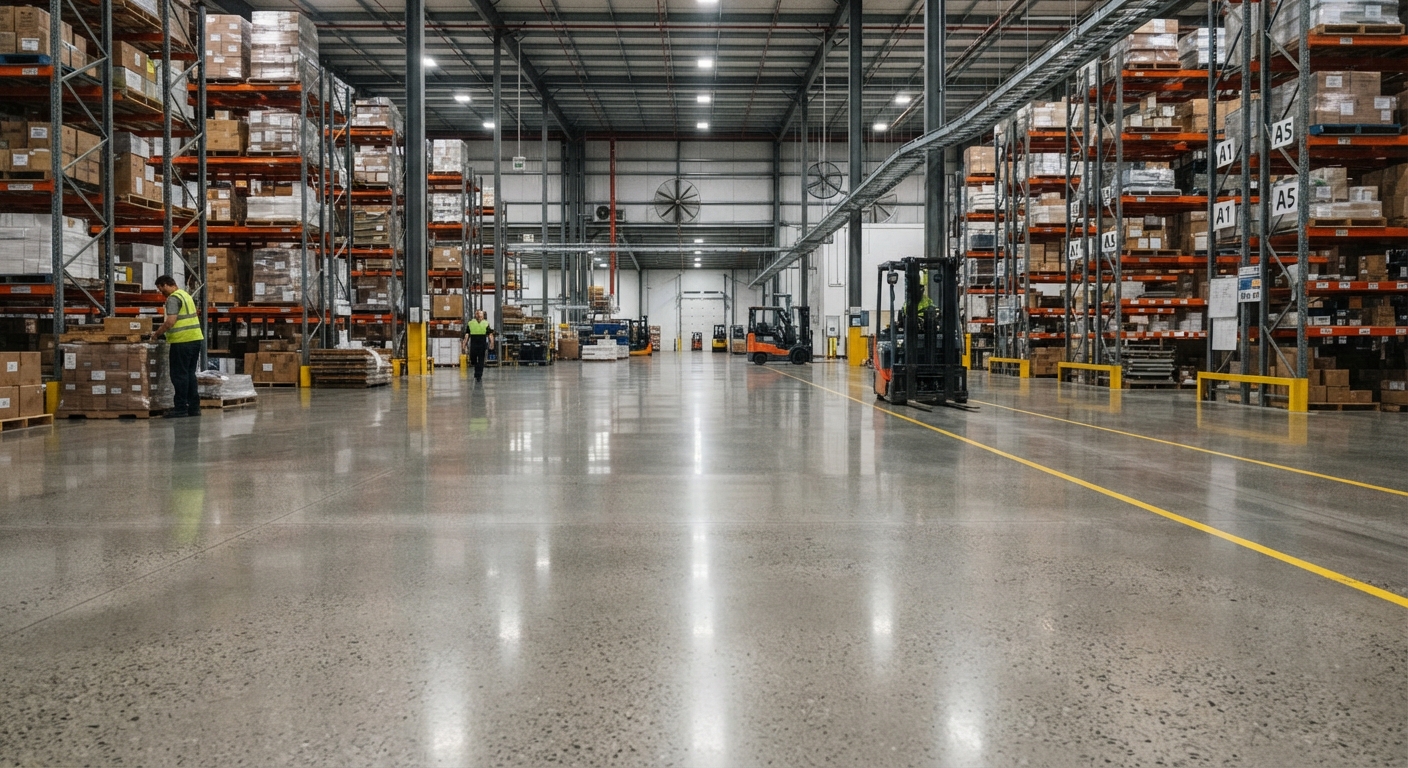
A polished concrete warehouse floor turns an existing slab into a harder, smoother, easier-to-clean surface that helps cut down on concrete dust. For facilities with steady forklift and pallet traffic, that matters because dust settles on stock, equipment, and racking every day. The results depend on the slab’s condition, the polishing process, and how the floor is maintained afterward.
At Concrete Polishing & Epoxy Florida, we grind, densify, and polish existing commercial concrete across Tampa Bay. We do not pour new slabs, so every warehouse project begins with a close look at the floor already in place. You can read about our commercial concrete polishing in Tampa to see how we handle larger facilities.
Key Takeaways
- A polished concrete warehouse floor reduces surface dusting by hardening the top of the slab.
- A densifier reacts with the concrete itself, so there is no coating film to peel.
- Forklift travel lanes, turning points, and dock areas wear first and need planning.
- Joint and crack repair should happen before polishing, not after.
- Routine cleaning and periodic burnishing help keep the finish working.
Why do warehouse floors create so much dust?
Many warehouse slabs have a weak, porous surface layer that breaks down under constant traffic. Forklift tires, pallet jacks, and foot traffic grind that top layer into fine powder, which then spreads across stock, shelving, and machines. The problem usually gets worse over time as more of the surface wears away.
Dust is more than a cleaning headache. It can collect on products, get into equipment, and make the floor look dull and dirty even right after sweeping. Facilities that store goods for customers often want a cleaner floor for that reason alone.
How does polishing help with dust control?
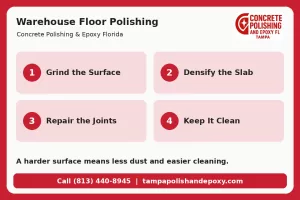
Polishing works in steps that change the surface of the slab itself. First, the crew grinds away the weak top layer to reach sound concrete. Next, a liquid densifier is applied, which soaks into the slab and reacts with it to form a harder surface. The floor is then polished with finer and finer tools to reach the level of shine the facility wants.
Because the densifier becomes part of the concrete, there is no film on top that can peel or flake under forklift wheels. Industry guidance from HTS Chemical on concrete densifiers explains that densifiers react with the slab to harden the surface, raise abrasion resistance, and reduce dusting.
| Step. | What happens. | Why it matters in a warehouse. |
|---|---|---|
| Grinding. | Removes the weak top layer. | Exposes sound concrete that wears better. |
| Densifying. | Hardens the surface from within. | Cuts dusting under steady traffic. |
| Polishing. | Refines the surface in stages. | Makes cleaning faster and easier. |
| Guard or sealer. | Adds stain protection where needed. | Helps in areas with oil or spills. |
Get a Free Epoxy Flooring Estimate
Talk with Our Team! Call Now!
How does forklift traffic affect a polished concrete warehouse?
Forklifts load the same paths again and again, so wear is not spread evenly across the floor. Travel aisles, turning points, rack entrances, and dock doors take the most abuse. Planning the polish around those high-wear zones helps the floor perform where it matters most.
Joint edges are a common weak spot in busy lanes. When forklift wheels cross a damaged joint, the impact can chip the edges further over time. Repairing joints and cracks before polishing gives the floor a smoother ride and protects the slab. Our joint sealing work is often part of that prep.
Polishing hardens the surface, but it cannot fix weak concrete underneath or repair structural damage. If parts of the slab are badly broken, those areas need repair first. A walk-through before the project starts helps sort out what polishing can and cannot solve.
Is polished concrete a better fit than epoxy for a warehouse?
It depends on how the space is used. Polished concrete works well in dry warehouses with heavy traffic, because it has no film to peel and is simple to maintain. Many distribution and storage spaces choose it for that reason.
Epoxy may make more sense in areas with heavy chemical exposure, frequent spills, or a need for specific safety colors and markings. Some facilities use both, with polished concrete in storage aisles and a coating in a battery room or wash area. Our epoxy floor coating services page covers that option in more detail.
What about oil, stains, and spills?
Polished concrete resists dust well, but it is still concrete, so oil and some liquids can stain it if they sit too long. A stain guard or sealer can add protection in areas near equipment, docks, or maintenance zones. Cleaning up spills quickly also helps keep the finish looking even.
For areas that see frequent spills or harsh chemicals, a coating may be the better choice. Our concrete sealing service is another way to add protection on existing concrete where a full coating is not needed.
How do you keep a polished warehouse floor working?
Routine care keeps the floor clean and helps it last. Regular dust mopping or auto-scrubbing with a neutral cleaner removes grit before it can wear the surface. Periodic burnishing can bring back shine in busy lanes that start to look dull.
Plan for maintenance from the start, since a cleaning routine that fits your operation is easier to keep up. Ask your contractor which cleaners to use and which to avoid, because some harsh products can dull the finish over time.
Get a Free Epoxy Flooring Estimate
Talk with Our Team! Call Now!
What should you ask before you start the project?
A clear plan helps you compare options and keep operations running during the work. Ask these questions before you approve the project:
- How will you handle damaged joints and cracks before polishing?
- Which areas need a stain guard or a different system?
- Can the work be phased so parts of the warehouse stay open?
- How soon can forklifts return to each section?
- What cleaning routine do you suggest afterward?
A polished concrete warehouse floor works best when these answers are settled early. To plan your project, call Concrete Polishing & Epoxy Florida at (813) 440-8945 or contact our team. We will look at your existing slab and walk you through options that fit your traffic and schedule.
Frequently Asked Questions
Q: Does polishing stop warehouse dust completely?
A: It greatly reduces surface dusting by hardening the slab, but regular cleaning is still needed to remove dirt that comes in from outside.
Q: Can forklifts drive on polished concrete?
A: Yes. Polished concrete is common in warehouses with forklift traffic, and the travel lanes should be planned and maintained with that use in mind.
Q: How long does a polished concrete warehouse floor last?
A: It depends on traffic, slab condition, and upkeep. A well-prepared floor with routine care can perform for many years.
Q: Do you pour new warehouse slabs?
A: No. We polish and coat existing concrete only, and we do not pour or install new slabs.
Recent Posts